CYXXSN AGV/AMR Solutions: 35% Throughput Increase in 3 Months
Introduction
In today’s manufacturing landscape, efficiency is no longer just a competitive advantage—it’s a survival factor. Companies are grappling with labor shortages, rising operational costs, and increasingly complex production flows. Traditional production lines, often dependent on manual material handling and human operators, struggle to maintain consistent throughput, especially as product varieties and demand fluctuations increase.
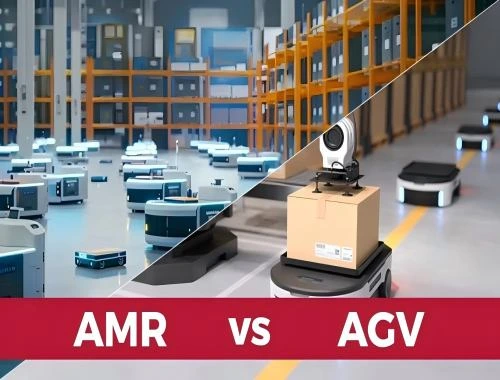
Autonomous mobile robots (AMRs) and automated guided vehicles (AGVs) have emerged as transformative solutions, enabling factories to operate with minimal human intervention while maintaining high flexibility. CYXXSN’s suite of AGV/AMR solutions demonstrates how intelligent robotics can reshape production lines, optimize workflows, and reduce operational risk. In this article, we explore the practical application of CYXXSN AGV/AMR systems in modern factories, backed by real-world case studies and measurable efficiency improvements.
Challenges in Modern Factory Production
Manufacturing operations face several pressing challenges:
✓Labor Shortages: Aging workforce and skilled labor scarcity hinder production continuity.
✓Complex Material Flow: Multi-stage assembly processes and high SKU counts increase operational complexity.
✓Inconsistent Throughput: Manual handling introduces variability, delays, and errors.
✓Safety Concerns: Human-operated vehicles and repetitive tasks expose staff to accidents.
Traditional automation systems, such as fixed-path AGVs, address some issues but lack flexibility, making adaptation to dynamic production environments difficult. Factories require solutions that combine adaptability, intelligence, and scalability to meet 2025 production demands.
CYXXSN AGV/AMR Solutions
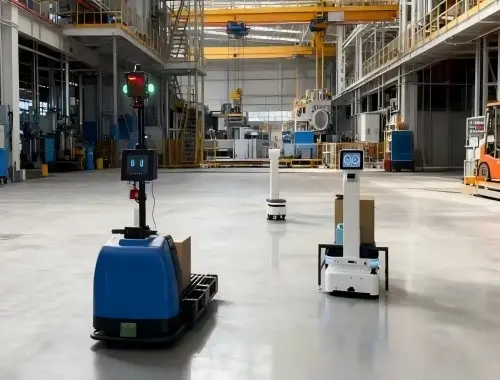
CYXXSN AGV and AMR robots are designed for fully autonomous factory operations, featuring:
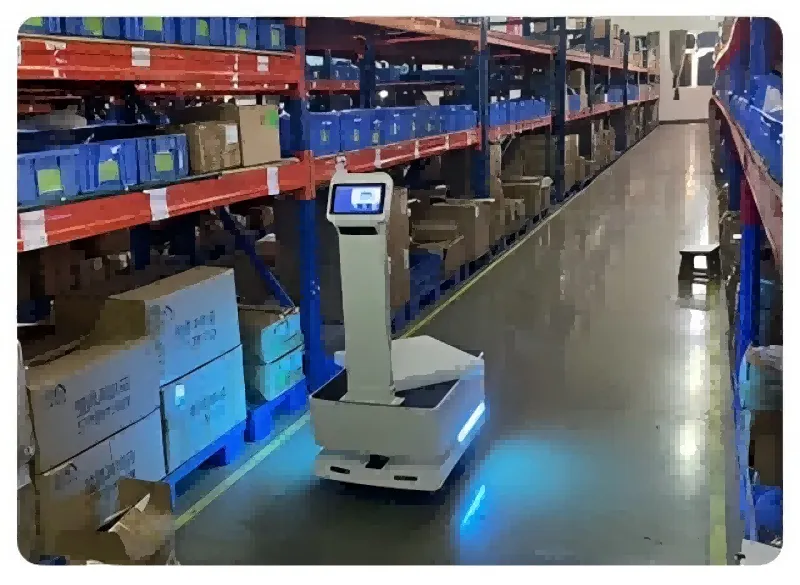
✓Autonomous Navigation: Equipped with LIDAR, cameras, and advanced sensors, AGV/AMR robots navigate complex factory layouts, avoid obstacles in real-time, and optimize travel paths.
✓Multi-Robot Coordination: Fleet management software enables multiple robots to collaborate seamlessly, balancing workloads and reducing bottlenecks.
✓Smart Scheduling: AI-driven task allocation dynamically prioritizes urgent orders, maximizes throughput, and adapts to workflow changes.
✓Modular Design: Robots can be customized with payload modules, conveyors, or robotic arms to handle diverse materials, from components to finished products.
These features collectively enable factories to achieve higher throughput, lower labor dependency, and improved operational safety.
Case Study: Mid-Sized Electronics Factory
A mid-sized electronics manufacturer in China recently integrated CYXXSN AMR robots into its assembly lines. Key outcomes include:
✓Throughput Increase: Production output rose by 35% within three months of deployment.
✓Error Reduction: Material misplacement and delays decreased by 40% due to autonomous handling.
✓Labor Optimization: Manual operators were reallocated to quality control and value-added tasks, reducing labor dependency by 25%.
✓Safety Improvement: No incidents were reported during the AMR operational period, compared to three minor accidents in the prior quarter.
The factory leveraged CYXXSN’s fleet management system to dynamically schedule tasks across multiple production zones. Robots autonomously detected congestion points and rerouted themselves, ensuring smooth production flow without human intervention.
Benefits and ROI
✓Operational Efficiency: Automated workflows reduce downtime and optimize material transport.
✓Cost Savings: Lower reliance on manual labor and reduced error rates lead to measurable cost reduction.
✓Scalability: Modular robot design allows factories to add or reconfigure robots as production needs evolve.
✓Safety and Compliance: Autonomous navigation minimizes accidents, ensuring compliance with occupational safety standards.
✓Digital Transformation: Integration with factory ERP and WMS enables real-time data analytics, predictive maintenance, and smart decision-making.
Factories adopting AGV/AMR systems typically see a return on investment within 12–18 months, depending on operational scale and robot deployment density.
Future Outlook: Smart Factories in 2025
Looking ahead, the role of AGV/AMR robots in manufacturing will expand beyond material handling:
✓AI-Enhanced Decision Making: Robots will leverage machine learning to predict production bottlenecks and dynamically adjust schedules.
✓Collaborative Robotics: AMRs will work alongside cobots to assemble components, conduct inspections, and manage inventory.
✓Integration with IoT and 5G: Real-time data from sensors and connected devices will enable instantaneous task coordination across multiple facilities.
✓Sustainable Manufacturing: Optimized routing and energy-efficient robots will reduce carbon footprint and support ESG goals.
CYXXSN continues to innovate in these areas, providing flexible, modular, and future-proof solutions for digital factories.
Ready to Achieve 35% Higher Throughput?
Join hundreds of factories that have transformed with CYXXSN autonomous robots.
Get Free Consultation Now