
Choosing the right robot chassis material is crucial for any robotics project. It affects the robot's performance, durability, and cost.
Different materials offer unique benefits and drawbacks. Aluminum, steel, plastic, carbon fiber, and composites are popular choices.
Each material has its own strengths and weaknesses. The best material for a robot chassis depends on specific needs.
Factors like load capacity, environment, and budget play a role. Understanding these materials helps in making informed decisions.
This article provides a comparative examination of robot chassis materials. It aims to guide enthusiasts, engineers, and students in selecting the right material.
Importance of Robot Chassis Material Selection
The material used for a robot chassis directly impacts the robot's functionality and lifespan. It dictates how the robot handles stress, load, and environmental challenges.
Selecting an appropriate chassis material ensures the robot operates efficiently and safely. Inappropriate material choices can lead to structural failures or performance issues.
Key considerations include:
· Load-bearing capacity
· Environmental resistance (e.g., moisture, chemicals)
· Cost constraints
· Ease of assembly and maintenance
· Compatibility with other components
Understanding these factors enables engineers and enthusiasts to select the best material for robot chassis designs. Making informed choices helps in achieving optimal robot performance and prolonged operational life.
Overview of Common Robot Chassis Materials
Many materials are available for constructing robot chassis. Each offers unique properties. The choice depends on the specific needs of the robot.
Aluminum is favored for its lightweight and rust resistance. Easily machined, this material is versatile. Despite its lightweight nature, aluminum provides considerable strength.
Steel is known for its durability and strength. It can withstand heavy loads but is heavier than other options. This extra weight might affect mobility.
Plastic materials offer a cost-effective and lightweight solution. However, they might not suit heavy-duty applications because of lesser strength.
Other materials like carbon fiber and composites are gaining popularity. They provide a superior weight-to-strength ratio but can be expensive.
Aluminum: Lightweight Versatility
Aluminum is a top choice for many robot chassis designs. It offers a perfect blend of lightness and strength. This makes it suitable for high-speed applications. Its rust resistance ensures longevity in diverse environments.
This material is easy to machine. It allows for complex shapes and designs without too much trouble. This aids in creating detailed and tailored robot frames.
While lightweight, aluminum does not compromise on robustness. It handles moderate weights well. Here are some key reasons to choose aluminum:
· Lightweight for enhanced mobility
· Rust-resistant, ensuring durability
· Easily machinable, offering design flexibility
Steel: Strength and Durability
Steel is renowned for its strength and durability. Heavier than aluminum, it offers unmatched toughness. This makes it ideal for heavy-duty robots that face demanding tasks.
Despite its weight, steel remains a popular choice. Its ability to withstand high loads is a significant advantage. For robots in challenging environments, steel provides reliable support.
Choosing steel means prioritizing durability over weight. For applications needing robust performance, steel is indispensable. Important features of steel include:
· High strength and load capacity
· Exceptional durability for harsh conditions
· Ability to withstand significant wear and tear
Plastics: Cost-Effective and Adaptable
Plastics offer an affordable option for robot chassis material. They are lightweight, making them suitable for projects on a budget. Despite their lower cost, they provide adequate performance for many applications.
One of plastics' most notable features is their versatility. They can be molded into various shapes, accommodating unique design requirements. However, they may not be suitable for high-stress or heavy-duty tasks.
Plastics are a solid choice for many robotics applications where cost-effectiveness is crucial. Key benefits include:
· Affordable and lightweight
· Highly adaptable to different designs
· Suitable for low to moderate impact conditions
Carbon Fiber and Composites: High Performance Options
Carbon fiber stands out as a premier material for high-performance robot chassis. Its combination of strength and low weight makes it ideal for applications requiring speed and agility. However, its higher cost can be a limiting factor for some projects.
Composites, including carbon fiber, combine various materials to achieve desired properties. They offer a customizable balance of strength, weight, and flexibility. This makes them versatile for different environmental and operational conditions.
When choosing carbon fiber or composites, consider factors such as:
· Exceptional strength-to-weight ratio
· High cost compared to other materials
· Suitability for high-speed and specialized applications
Key Factors in Choosing the Best Material for Robot Chassis
Selecting the ideal robot chassis material involves carefully analyzing several factors. Each factor influences the performance and cost-effectiveness of the final product. An informed decision will enhance the robot's functionality and longevity.
First, consider the weight-to-strength ratio. Lightweight materials improve speed and efficiency, while high-strength options are crucial for load-bearing robots. The environmental conditions also play a role; some materials resist moisture and chemicals better than others.
Cost is always a primary consideration. High-performance materials, though more expensive, offer extended durability. Key factors to weigh include:
· Weight-to-strength ratio
· Environmental resistance
· Cost and budget constraints
Choose wisely, balancing these elements based on your specific robot requirements.
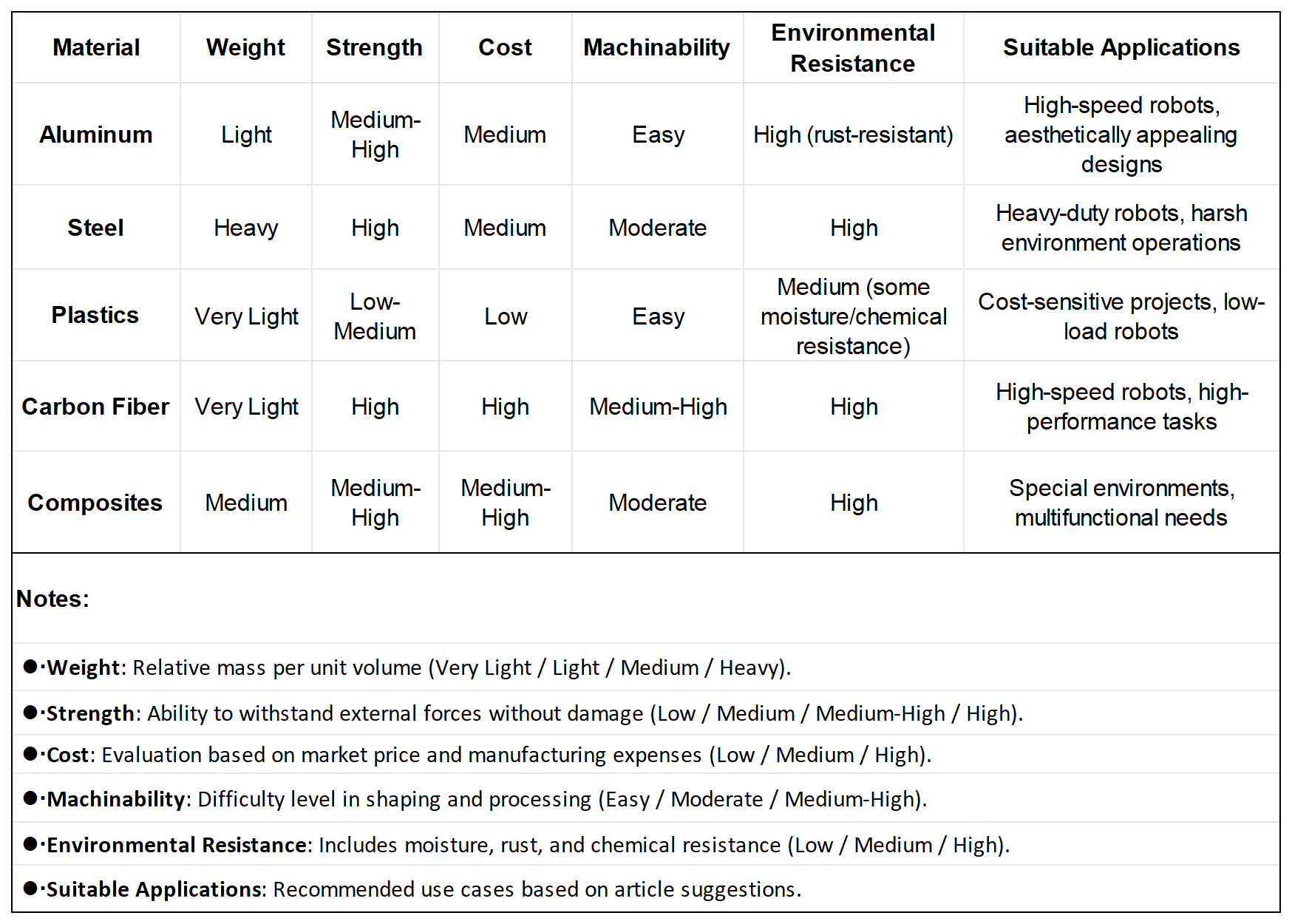
Comparative Table: Robot Chassis Material Properties
To help visualize the differences, a comparative table summarizes key properties of common robot chassis materials. This table includes weight,
strength, cost, and thermal properties. Such a comparison aids in identifying the best material for a specific application.
Application Scenarios and Material Suitability
Different robot applications dictate specific material requirements for optimal performance. Lightweight materials enhance
speed, while durable options suit heavy-duty tasks.
Suitability List
· High-speed robots: Prefer aluminum or carbon fiber.
· Heavy-duty robots: Opt for steel or reinforced composites.
· Cost-sensitive projects: Use plastics for affordability.
· Aesthetic projects: Aluminum and carbon fiber are visually appealing.
Choosing the right robot chassis material can maximize efficiency and cost-effectiveness based on the project needs.
Future Trends in Robot Chassis Materials
Innovation in material science propels the evolution of robot chassis materials. These advancements aim to enhance
performance and sustainability while reducing costs.
Emerging Trends
· Eco-friendly materials: Aim to minimize environmental impact.
· Hybrid materials: Combine benefits from diverse materials for superior performance.
· Recyclability: Becoming an essential consideration in design.
These trends highlight a future where robotics benefits from sustainable, high-performance materials that
accommodate evolving technological demands.
Conclusion: Selecting the Right Robot Chassis Material
Choosing the best material for a robot chassis involves balancing strength, weight, and cost. Consider the specific
needs of the robot to make informed decisions.Future advancements will continue to influence material selection,
ensuring innovative possibilities in robotics design.