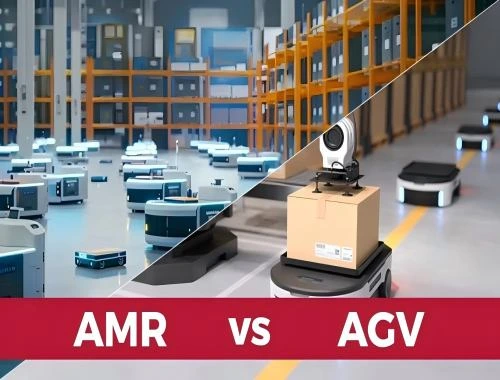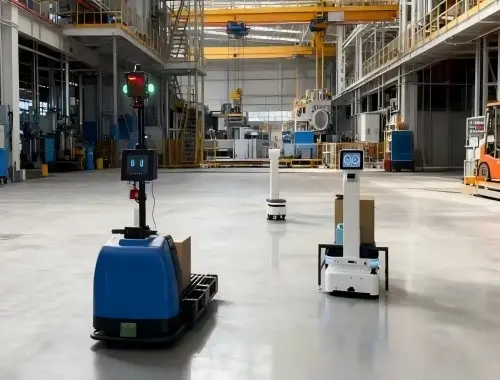
Smart forklifts are revolutionizing warehouse operations. They bring advanced technology to the logistics industry, enhancing efficiency and safety.
These forklifts are equipped with sensors and software, allowing them to navigate autonomously. This reduces the need for manual labor and minimizes human error.
Forklift automation offers significant cost savings. Automated forklifts can work around the clock, boosting productivity and throughput.
Integrating smart forklifts with warehouse management systems provides real-time data tracking. This leads to better inventory management and faster order fulfillment.
As technology evolves, smart forklifts continue to offer new features. They are a key component in the digital transformation of warehouses, helping businesses stay competitive.

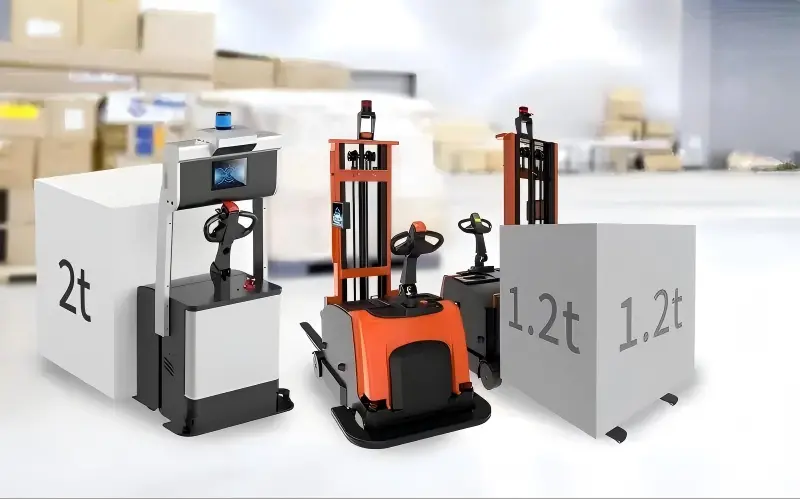
What Are Smart Forklifts?
Smart forklifts are a blend of traditional forklifts and cutting-edge technology. They are designed to operate autonomously in a warehouse setting. These forklifts use sensors, cameras, and software to navigate and perform tasks with precision.
The features of smart forklifts include:
· Autonomous navigation capabilities
· Advanced safety systems
· Real-time data tracking
Their ability to learn and adapt makes them unique. Smart forklifts can adjust to different warehouse layouts and conditions. This flexibility provides numerous advantages over manual forklifts.
These forklifts play a crucial role in modern warehouses. They enhance operations by improving safety, efficiency, and accuracy. Their use results in a significant reduction of human error. This makes them indispensable in optimizing warehouse processes.
Key Technologies Behind Smart and Robotic Forklifts
Smart and robotic forklifts rely on several advanced technologies. These technologies allow them to function seamlessly in warehouse environments. The combination of these elements results in impressive performance and efficiency.
Some key technologies include:
· Sensors for obstacle detection
· AI for decision-making
· GPS for precise positioning
Sensors play a crucial role in enhancing safety. They allow the forklifts to detect obstacles and avoid collisions. Artificial Intelligence (AI) enables forklifts to make decisions quickly and accurately.
These technologies also facilitate effective communication. Forklifts can interact with other automated systems within the warehouse. This integration leads to smooth operations and optimized workflows, setting the stage for future innovations.
Benefits of Forklift Automation in Warehousing
Forklift automation brings numerous advantages to warehousing. It significantly boosts efficiency and productivity. Automated forklifts can operate continuously without breaks, enhancing throughput and reducing delays.
Reduced labor costs are another key benefit. With less reliance on manual labor, warehouses can allocate resources more effectively. This translates into significant cost savings over time.
Automation also improves accuracy in inventory management. Robotic forklifts ensure precise handling of goods, minimizing errors. This results in better order fulfillment and customer satisfaction.
Additional benefits include:
· Improved safety with fewer accidents
· Enhanced inventory control
· Faster turnaround times
Automation reduces human error and increases safety. The precision of automated forklifts lowers the risk of accidents and injuries. This contributes to a healthier work environment for warehouse staff.
Ultimately, forklift automation transforms warehouse operations. It leads to optimized performance, cost efficiency, and enhanced reliability. Embracing these technologies is essential for businesses aiming to stay competitive.
How Automated Forklifts Improve Safety and Efficiency
Safety is a critical concern in warehouses. Automated forklifts address this by integrating advanced safety features. These features help in minimizing accidents.
Smart forklifts are equipped with sensors. These sensors detect obstacles and prevent collisions. This enhances safety and protects both goods and workers.
Efficiency is equally important. Automated forklifts operate consistently and tirelessly. This leads to higher productivity and smoother operations.
Key improvements include:
· Real-time obstacle detection
· Reduced operator fatigue
· Consistent performance
These features enable smart forklifts to navigate efficiently. They adjust to changing warehouse conditions, enhancing adaptability. This results in streamlined workflows and improved operational efficiency.
The impact of automated forklifts on safety and efficiency is profound. By minimizing risks and improving performance, they create a safer and more productive work environment.
Integration with Warehouse Management Systems
Smart forklifts revolutionize warehouse efficiency through seamless integration with Warehouse Management Systems (WMS). This integration provides real-time data for inventory tracking and task allocation, enhancing overall coordination.
Key integration benefits include:
· Real-time inventory updates
· Automatic task scheduling
· Enhanced data analytics
These systems facilitate quick decision-making, providing insights into operational performance. By integrating smart forklifts with WMS, warehouses achieve better resource management and reduced downtime.
The integration transforms how warehouses operate. It leads to more organized spaces and efficient operations. As a result, businesses experience enhanced agility and responsiveness, ready to tackle market demands.
Overcoming Challenges in Adopting Smart Forklifts
Adopting smart forklifts may present several challenges for businesses. High initial investment costs and training requirements can pose initial hurdles. However, the long-term benefits often outweigh these upfront expenses.
To effectively tackle these challenges, consider:
· Evaluating total cost of ownership
· Implementing phased deployment
· Focusing on staff training
Phased deployment allows companies to gradually integrate smart technology. Meanwhile, training programs help staff become proficient with new systems quickly. Addressing these areas ensures a smoother transition and lays the foundation for successful smart forklift adoption. Ultimately, this strategic approach paves the way for innovation and operational excellence.
Real-World Applications and Industry Examples
Smart forklifts are transforming various industries through automation. In retail, they manage inventory by accurately tracking goods. In manufacturing, they assist with just-in-time deliveries, ensuring materials are available when needed. Their versatility makes them an asset across sectors.
Notable applications include:
· Efficient inventory management
· Improved logistics in distribution centers
· Enhanced material handling in manufacturing plants
Many companies have successfully implemented smart forklifts. For example, a leading e-commerce giant uses them to streamline warehouse operations. Their adoption has led to faster processing times and reduced errors, setting a benchmark for others.
The Future of Forklift Automation and Warehouse Operations
The future of forklift automation is promising, with continuous advancements in technology. Emerging trends include the integration of artificial intelligence and machine learning, allowing forklifts to become even smarter and more efficient.
Warehouse operations will continue to evolve, driven by the need for speed and accuracy. As companies prioritize automation, smart forklifts will play a central role in this transformation. Their ability to adapt and learn will ensure they remain valuable assets in the ever-changing logistics landscape.
Conclusion: Embracing Smart Forklifts for a Competitive Edge
Adopting smart forklifts transforms warehouses into agile, efficient spaces. This innovation not only boosts productivity but also supports sustainability. Embrace smart forklifts to stay ahead in a competitive market and ensure long-term success.