Introduction
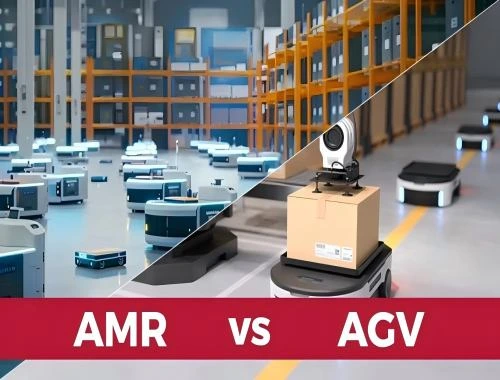
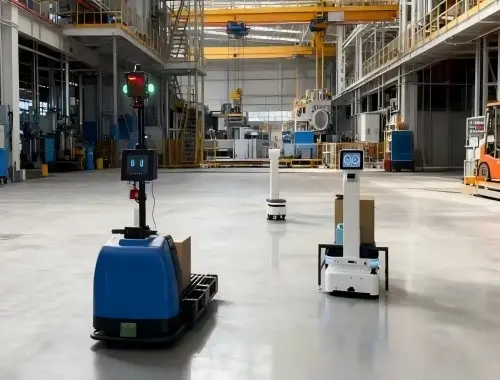
As Industry 4.0 accelerates the digital transformation of manufacturing and logistics, smart forklifts, Automated Guided Vehicles (AGVs), and Autonomous Mobile Robots (AMRs) are becoming the backbone of intralogistics. However, while these robots promise higher efficiency and flexibility, their lack of interoperability often creates silos, integration costs, and scalability barriers.
Why Interoperability Matters in Industry 4.0
Multi-vendor environments : Factories often deploy AGVs/AMRs from different suppliers. Without common protocols, integration becomes costly.
Dynamic workflows : Logistics requires robots to communicate and coordinate in real time across changing tasks.
Scalability : A lack of interoperability limits fleet expansion, making companies “locked in” to a single vendor.
Key Challenges in AGV/AMR Interoperability
| Challenge | Description | Impact |
|---|---|---|
Proprietary communication protocols | Vendors often use closed systems (Wi-Fi, RFID, LIDAR-based navigation). | Difficult to integrate multi-brand fleets. |
| Lack of standardized interfaces | No universal middleware for smart forklifts and AGVs. | High customization costs. |
| Data silos | Telemetry and task data are not easily shared. | Reduced real-time visibility. |
| Cybersecurity risks | Cross-platform integration increases vulnerabilities. | Threats to safety and operations. |
Emerging Standards and Solutions
VDMA VDA 5050 (Germany) – Defines communication between AGVs/AMRs and fleet management systems.
OPC UA for Robotics – Enables machine-to-machine communication.
ROS-Industrial – Extends open-source ROS for industrial use.
MHI’s MAS Standards (U.S.) – Promotes interoperability in warehouse automation.
Case Applications
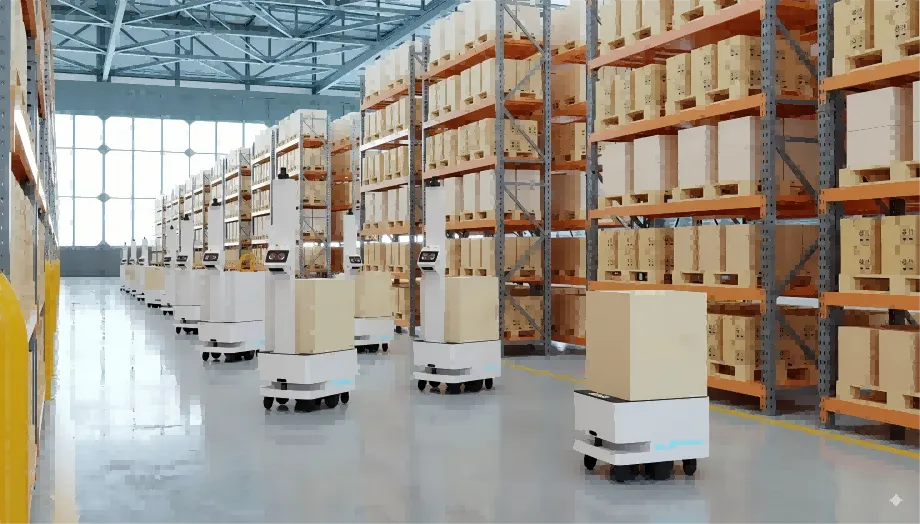
Smart Forklifts + AMRs : Combining autonomous forklifts with AMRs enables hybrid fleets to handle both heavy pallets and small-box logistics.
Hospitals & Healthcare : AMRs integrated with elevators and hospital IT systems can deliver medicines, but interoperability remains a challenge.
E-commerce Warehouses : Multi-brand AGVs often need middleware platforms for coordination.
Strategies for Interoperability
Adopt open standards early to future-proof investments.
Use middleware platforms to unify communication.
Prioritize modular design in procurement.
Collaborate with integrators and consortia.
Conclusion and Outlook
Interoperability is the missing link for scaling robotics in Industry 4.0. Companies that embrace open standards and interoperable platforms will gain scalability, efficiency, and competitive advantage.
References
VDMA. VDA 5050: Interface for the Communication between AGV and a Master Control. 2022.
OPC Foundation. OPC UA for Robotics. 2023.
ROS-Industrial Consortium. ROS-I Overview. 2023.
MHI. Mobile Automation Standards. 2022.
McKinsey & Company. The Future of Automation in Logistics. 2023.