In the digital age, Artificial Intelligence (AI) has evolved far beyond algorithms and data analytics. With the rise of Physical AI, robots are transforming from programmed tools into intelligent systems that can learn, adapt, and act on their own. This evolution is driving a new era of automation across industries—from manufacturing and logistics to healthcare and beyond.
From Digital Intelligence to Physical Intelligence 
Traditional AI exists mainly in the virtual world, analyzing massive datasets and optimizing decision-making. Physical AI, however, brings intelligence into the real world. By combining machine learning, reinforcement learning, and advanced motion control systems, robots can now learn from experience and adjust their behavior dynamically based on environmental feedback.
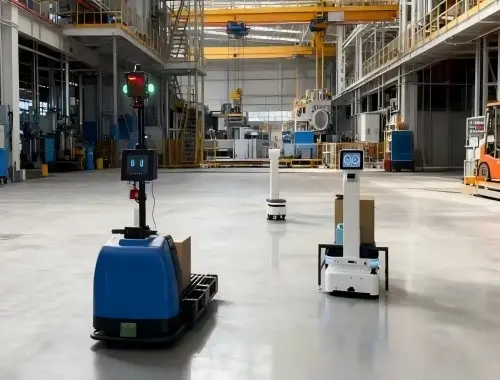
This means robots no longer rely on rigid, rule-based programming. Instead, they continuously improve through trial, error, and real-time feedback. In warehouses, AI-driven robots can plan efficient routes, avoid obstacles, and adapt to layout changes. In hospitals, service robots can optimize medication delivery routes or assist healthcare staff by learning from daily interactions.
Bringing Intelligence to the Real World
Bringing AI from theory into physical application comes with significant challenges: safety, reliability, cost, and the need for seamless human-machine collaboration.
“Applying AI to real-world problems is difficult because there’s simply not enough data to program for every exception,” explains Kristi Martindale, Chief Business Officer at Palladyne AI. The company’s low-code and no-code AI motion control systems are designed to make robots capable of learning and adapting without constant reprogramming.
Rohit Khanna, Chairman of 3D Infotech, adds: “The technology is mature, but there aren’t yet enough application suites to rapidly deliver cross-industry value.” He emphasizes that education and awareness are key to accelerating the adoption of Physical AI.
Building Robots That Can Learn
Training is at the core of Physical AI. Rather than feeding static data, engineers now create large language models (LLMs) and multimodal learning frameworks that enable robots to understand context, simulate scenarios, and self-improve.
By using synthetic data—from CAD files, sensor images, or multi-angle visual recordings—AI systems can construct detailed knowledge graphs for complex operations such as assembly, inspection, and transportation. “A powerful AI must be both simple and robust,” Khanna notes. “Generative AI tools help automate labeling and training, enabling robots to learn faster and adapt across diverse environments.”
Agentic AI: Toward Autonomous Decision-Making
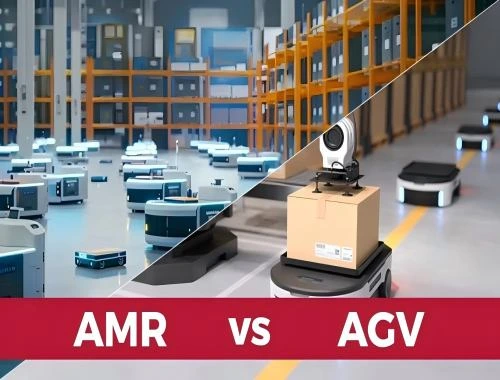
Within the evolution of Physical AI, Agentic AI has become a crucial advancement. Unlike traditional systems that rely on fixed rule trees, Agentic AI enables robots to act proactively. When faced with an obstacle, an autonomous mobile robot can reroute, analyze data, and decide the next optimal step—without waiting for human input.
This capability transforms robots from mere tools into intelligent collaborators. In manufacturing, they can optimize assembly sequences; in logistics, they autonomously allocate resources, predict bottlenecks, and dynamically adjust workflows.
Humans and Machines: Partners, Not Rivals
Automation often raises concerns about job displacement—but the reality is more balanced. Physical AI is not about replacing humans; it’s about empowering them. By taking over repetitive, low-value tasks, robots free workers to focus on creative, analytical, and decision-driven roles.
“Low-code AI tools now allow production technicians to handle tasks that once required engineers,” says Martindale. “This shift not only boosts efficiency but also opens up higher-value career paths.”
Khanna adds, “No matter how advanced automation becomes, humans remain the ultimate decision-makers. Robots can execute, but humans define the goals, assess quality, and enforce standards.”
A Glimpse into the Future
From service robots to industrial automation, from medical assistance to autonomous vehicles, Physical AI is bringing intelligence into motion. Future robots will not only follow commands—they’ll learn, understand, and act with purpose.
The significance of this transformation extends beyond productivity or cost savings. It redefines the relationship between humans and machines. As intelligent systems gain perception and adaptability, they cease to be mere tools and become extensions of human innovation—a new generation of thinking, learning, and collaborating partners.
© 2025 Shaanxi Chenyue Information Technology Co., Ltd. | www.cyxxsn.com