
As manufacturers and logistics operators press to scale automation, the humble robot chassis has shifted from a passive frame to a strategic platform. Modular, open chassis designs — combined with markerless navigation and open SDKs — are removing traditional barriers to large-scale mobile robot deployments. This article examines the technical choices, integration patterns and practical trade-offs teams encounter when adopting modular chassis platforms.
Why chassis design matters now
Over the past five years, production and distribution centers have moved from pilot projects to fleet-scale deployments. That transition exposes a familiar friction: hardware diversity and tightly-coupled software slow rollouts and raise costs. A chassis that supports modular payloads, swappable power and well-documented APIs shortens the path from pilot to production.
Industry reports and trade organizations have repeatedly highlighted a trend toward platform standardization. When the chassis becomes the common element, logistics teams can reuse software, tooling and safety certifications across multiple robot variants — a major operational advantage.
From closed AGVs to open, modular ecosystems
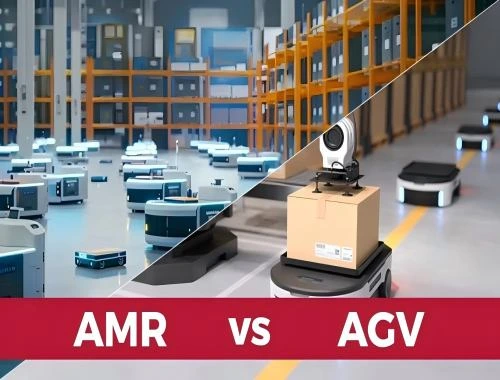
Traditional automated guided vehicles (AGVs) were often tied to fixed infrastructure: magnetic strips, embedded beacons or bespoke mapping tools. Modern chassis favor markerless navigation and sensor fusion (lidar, stereo vision, IMU), enabling robots to navigate dynamic environments with less site preparation.
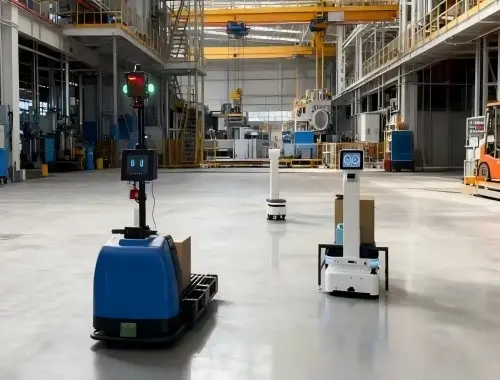
Crucially, a modular chassis exposes clear extension points: electrical connectors, mounting interfaces, and software hooks. That openness lets engineering teams replace only the subsystem they need — for example swapping a shelf module for a manipulator — without revalidating the entire platform.
Platform benefits at a glance
Faster integration cycles — fewer full-system requalifications
Lower total cost of ownership through reuse of core modules
Flexibility to serve multiple use cases with a single chassis family
Practical choices: navigation, safety and interfaces
When evaluating a modular chassis, three technical areas determine success: navigation stack, safety architecture and integration interfaces.
Navigation: Markerless SLAM solutions vary — 2D lidar-based SLAM is mature for structured warehouses, while camera-centric or visual-inertial approaches suit more dynamic or narrow-aisle operations. Multi-sensor fusion remains best practice for robustness.
Safety: Integrated safety controllers with SIL-capable inputs and certified stopping behaviors simplify system-level approvals and speed site acceptance tests.
Interfaces: RESTful APIs, MQTT and ROS/ROS2 bridges are common. Choose platforms that document message schemas and error modes clearly — that reduces integration lead time significantly.
Short field example: faster changeovers in electronics assembly
In a recent integration at an electronics contract manufacturer, a 100 kg-class modular chassis was used to replace three legacy vehicle types. The integrator reports that task reconfiguration time dropped from hours to under one hour for simple tooling swaps — a result of standardized mechanical mounts and a consistent electrical connector map. The net effect: fewer forklift interventions and tighter line-side replenishment windows.
Payloads and modular families: 60–600 kg
A practical chassis portfolio covers a wide payload envelope. CHENYUE’s modular families span approximately 60 kg at the light end (for parts kitting and healthcare tasks) up to 600 kg for pallet and heavy-transfer applications. Matching the chassis family to duty cycle, uptime and environmental constraints prevents both under- and over-investment.
Considerations when selecting capacity:
Expected continuous vs. intermittent duty cycles
Battery chemistry and hot-swap vs. opportunity-charging strategies
Upper-structure center of gravity and sensor placement for stability
Where modular chassis adds the most value
Modular platforms are not a one-size-fits-all silver bullet, but they unlock clear advantages where variability and reuse matter:
Warehouse & distribution centers — one chassis, multiple payloads (totes, conveyors, pallet handlers)
Light assembly lines — quick changeover between kit delivery and component transport
Healthcare logistics — hygienic, configurable surfaces and predictable power profiles
Integration checklist for technical teams
Before committing to a chassis, engineering teams should confirm:
Availability of SDKs, sample code and simulation models
Documented API contracts and versioning policy
Safety certification artifacts and test reports
Serviceability: spare parts strategy and local support options
Further reading
For broader market context and standards guidance, see the International Federation of Robotics and global Industry 4.0 reports:
Learn more from CHENYUE
Related CHENYUE resources:
Outlook
As factories and logistics centers scale fleets, the economics of reuse and the cost of bespoke solutions become clearer. Modular, open chassis platforms reduce friction in deployment, enable faster hardware refresh cycles and give operations teams predictable upgrade paths. For organizations planning fleet growth, investing time early to evaluate chassis openness, safety artifacts and API maturity will pay dividends during scale-up.