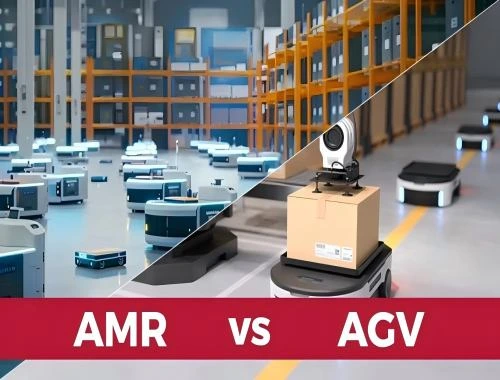
In today's fastpaced world, automation is revolutionizing industries by making processes more efficient and reducing human error. The drive towards automation is not just about replacing human labor but enhancing the capabilities of workers by allowing machines to handle repetitive, strenuous, and time-consuming tasks. As industries across the globe strive for higher efficiency and productivity, automation technologies are becoming indispensable tools in achieving these goals. Two key players in this transformation are Automated Guided Vehicles (AGVs) and Autonomous Mobile Robots (AMRs). Although they serve similar functions, they have distinct differences that make them suitable for different applications. Understanding these differences is crucial for businesses looking to optimize their operations through automation. By leveraging the strengths of both AGVs and AMRs, companies can tailor their automated solutions to meet specific operational needs, thus driving efficiency and innovation in their workflows.
What Are AGVs and AMRs?
Automated Guided Vehicles (AGVs)
AGVs are industrial robots that follow a set path or guide to transport goods within a facility. They rely on physical markers like magnetic strips, wires, or optical sensors embedded in the floor to navigate. This makes AGVs well-suited for environments with predictable layouts and repetitive tasks. However, their reliance on fixed paths limits flexibility and adaptability. Despite these limitations, the precision and reliability of AGVs make them invaluable in settings where consistency is key, such as in automated production lines where timing and coordination are critical.
AGVs are commonly used in settings like factories and warehouses where they efficiently move raw materials, components, or finished products between different locations. Due to their precision and reliability, they are ideal for high-volume operations where consistency is paramount. Additionally, AGVs can help streamline workflows by reducing the need for manual labor, thus allowing human workers to focus on more complex, value-added activities. This integration of AGVs into industrial processes not only boosts productivity but also contributes to maintaining high safety standards by minimizing human intervention in hazardous environments.

Autonomous Mobile Robots (AMRs)
In contrast, AMRs are more advanced and versatile. They use sophisticated sensors and onboard processing to understand their environment and navigate autonomously. Instead of relying on fixed paths, AMRs create dynamic maps of their surroundings, allowing them to adjust their routes in real time. This adaptability is particularly beneficial in environments where conditions can change rapidly, such as in facilities that handle diverse types of goods and materials.
This flexibility makes AMRs ideal for dynamic environments where layouts frequently change or where there are obstacles to navigate around. They can be used in a variety of applications, from transporting goods in warehouses to assisting with inventory management and even delivering items directly to consumers. AMRs also offer enhanced scalability, as they can be reprogrammed or updated with new software to handle different tasks, making them a future-proof investment for businesses aiming to grow and adapt to changing demands. Furthermore, their ability to operate alongside human workers without the need for significant infrastructure changes makes them an attractive option for many industries.
Key Differences Between AGVs and AMRs
While both AGVs and AMRs are used to automate material handling, their fundamental differences lie in navigation, flexibility, and application. Understanding these distinctions is essential for businesses to choose the right technology that aligns with their operational goals and constraints.
Navigation and Flexibility
· AGVs: Follow predefined paths, making them less flexible. Their routes are fixed, which means changes in layout require reconfiguration of the guide paths. This can be time-consuming and costly, especially in facilities that undergo frequent layout changes. However, in stable environments, AGVs provide unmatched reliability and precision, making them a preferred choice for tasks that require consistency and accuracy.
· AMRs: Use sensors and software to navigate dynamically, allowing for greater flexibility. They can adapt to changes in the environment without needing physical alterations. This capability is particularly useful in settings where the layout is not static and where there is a need to navigate around obstacles or adjust to new workflows. AMRs' ability to learn and map their surroundings offers a significant advantage in environments where operational demands are constantly evolving.
Applications and Use Cases
· AGVs: Best suited for environments with high predictability, such as manufacturing plants or large distribution centers with minimal layout changes. In these settings, AGVs can operate efficiently without the need for frequent recalibration or reprogramming. Their predictability and consistency make them ideal for continuous operations that require minimal supervision.
· AMRs: Ideal for environments that require adaptability, like e-commerce warehouses or facilities that have frequent changes in layout and task requirements. AMRs are also well-suited for applications that require interaction with human workers, as they can be programmed to recognize and respond to dynamic conditions. Their ability to adjust to various tasks makes them a versatile solution for businesses looking to enhance their operational agility.
Cost and Implementation
· AGVs: Generally have lower upfront costs but might require significant investment if layout changes are frequent. The need for physical infrastructure, such as magnetic strips or wires, can add to the costs, especially if frequent changes are needed. However, once set up in a stable environment, AGVs offer a cost-effective solution for automating material handling tasks.
· AMRs: Might have a higher initial cost due to advanced technology but can be more cost-effective in dynamic environments where flexibility is required. The lack of need for fixed infrastructure and the ability to quickly adapt to new tasks can offset the higher initial investment. Over time, the flexibility and adaptability of AMRs can lead to significant cost savings, particularly in environments where change is constant.
Benefits of Integrating AGVs and AMRs
Enhancing Efficiency
Both AGVs and AMRs contribute to increased efficiency by automating material transport, reducing the need for manual labor, and minimizing human error. This can lead to faster processing times, improved accuracy, and increased throughput. Automation also allows businesses to streamline their operations, enabling them to handle larger volumes of work without compromising on quality or speed. By integrating these technologies, companies can achieve a higher level of operational efficiency, which is crucial in today's competitive market.
Improving Safety
Automating material handling reduces the risk of workplace accidents caused by human error. Both AGVs and AMRs are equipped with safety features that allow them to detect obstacles and navigate around them, ensuring the safety of both personnel and goods. By minimizing human involvement in potentially dangerous tasks, businesses can create a safer working environment, leading to fewer accidents and a reduction in downtime. The implementation of AGVs and AMRs also demonstrates a commitment to worker safety, which can enhance employee morale and retention.
Reducing Operational Costs
By automating routine tasks, businesses can reduce labor costs and allocate human resources to more complex tasks that require critical thinking and decision-making. Additionally, the precision and reliability of AGVs and AMRs minimize the risk of damage to goods and equipment. This can result in significant cost savings over time, as automation helps reduce waste and improve resource utilization. Furthermore, the efficiency gains from automation can lead to higher productivity, allowing companies to achieve more with fewer resources.

Choosing the Right Solution: AGV vs. AMR
Selecting between AGVs and AMRs depends on your specific operational needs and environment. Here are some factors to consider when deciding which technology best suits your business objectives.
Environment and Layout
· If your facility has a fixed layout with little change over time, AGVs may be the more cost-effective solution. Their ability to operate on predetermined paths makes them ideal for stable environments with predictable workflows. In such settings, AGVs can deliver consistent performance and reliability without the need for frequent adjustments.
· If your environment is dynamic with frequent layout changes, AMRs offer the flexibility needed to adapt to new conditions. Their ability to navigate autonomously and adjust to changing environments makes them a suitable choice for businesses that require adaptability and scalability. AMRs can seamlessly integrate into existing operations without the need for extensive infrastructure changes, making them a versatile solution for dynamic settings.
Budget Considerations
· Evaluate the initial investment and long-term costs associated with implementing AGVs versus AMRs. Consider not only the upfront costs but also the potential savings from increased efficiency and reduced labor costs. It is important to conduct a comprehensive cost-benefit analysis to determine which option offers the best return on investment for your specific needs.
· Consider the potential cost savings from increased efficiency and reduced labor costs when deciding which option to pursue. While AMRs may have a higher initial cost, their flexibility and adaptability can lead to long-term savings, particularly in environments where change is constant. Understanding the total cost of ownership and the potential benefits of each technology can help businesses make informed decisions.
Operational Requirements
· Assess the specific tasks you need to automate and determine whether the precision of AGVs or the adaptability of AMRs aligns better with your operational goals. Consider the nature of your operations, including the types of goods you handle and the complexity of your workflows, to identify which technology best meets your needs.
· Determine the level of flexibility required in your operations and whether the adaptability of AMRs aligns with your business objectives. If your operations demand a high degree of adaptability and scalability, AMRs may be the better choice. Conversely, if consistency and reliability are your primary concerns, AGVs may provide the stability you need.
by Arno Senoner (https://unsplash.com/@arnosenoner)
Real-World Applications
Warehouse and Distribution Centers
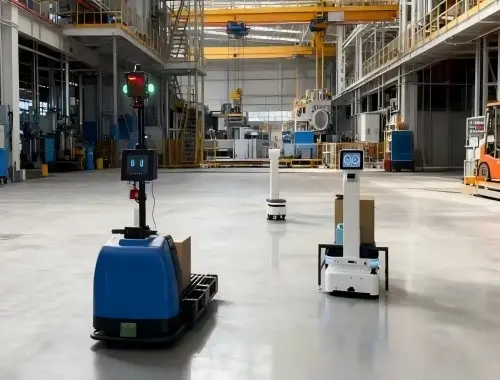
In large warehouses, AGVs are often used for repetitive tasks like moving pallets and containers along predefined routes. Their ability to efficiently handle high volumes of goods makes them ideal for large-scale operations where speed and accuracy are critical. Meanwhile, AMRs excel in environments that require complex routing and inventory management, such as e-commerce fulfillment centers. Their flexibility and adaptability allow them to handle diverse tasks, from picking and sorting to managing dynamic inventory systems.
Manufacturing
In manufacturing settings, AGVs transport raw materials and components to assembly lines, ensuring a steady flow of materials to support production processes. Their precision and reliability make them suitable for tasks that require strict adherence to schedules and workflows. While AGVs handle these repetitive tasks efficiently, AMRs can handle tasks that require adaptability, such as delivering parts to various workstations in a production facility. Their ability to navigate complex environments and adjust to changing conditions makes them an asset in manufacturing operations that require flexibility and agility.
Healthcare
AMRs are increasingly used in hospitals to deliver medications and supplies, freeing up healthcare staff to focus on patient care. Their ability to navigate dynamically is crucial in busy hospital environments where routes can change rapidly. By automating routine tasks, AMRs help improve efficiency and accuracy in healthcare settings, allowing medical staff to dedicate more time to patient care. The implementation of AMRs in healthcare environments also helps reduce the risk of human error, enhancing the overall quality of care provided to patients.
Conclusion: Embracing Automation for the Future
Automation through AGVs and AMRs represents a significant advancement in logistics and material handling. By understanding the differences and benefits of each, businesses can make informed decisions to enhance their operations, improve safety, and reduce costs. The integration of these technologies not only boosts efficiency and productivity but also positions businesses to adapt to changing market demands and technological advancements. As technology continues to evolve, the integration of AGVs and AMRs will become increasingly important in achieving efficient, sustainable, and competitive operations. Embracing automation is not just a trend but a strategic move towards a more efficient and resilient future, where businesses can thrive in an increasingly complex and competitive landscape.